Essential Structures: Exploring the role of silos in animal feed.
The role of silos in livestock and poultry farming is multifaceted and crucial for the efficiency and sustainability of these industries. Silos offer an optimal solution for storing large quantities of feed, such as grains and forages, under conditions that preserve their quality and nutritional value. Their ability to protect feed from external elements, such as weather and pests, is vital in maintaining quality and reducing waste.


The history of silos is fascinating and reflects the evolution of agricultural and storage practices over time. Here is a brief journey through the history of silos:
Ancient origins.
First Civilizations: The idea of storing grain in special structures dates back to the ancient civilizations of Egypt and Mesopotamia, where the first underground silos were built to store grain surplus.
Underground Silos: In ancient Greece and Rome, silos were cavities in the earth, often lined with stone or wood, used to protect grain from the elements and pests.
Development in the middle ages.
Wood and Stone Silos: During the Middle Ages in Europe, silos evolved into more sophisticated structures, including wooden or stone towers for grain storage.
Industrial revolution.
Technological Advances: With the Industrial Revolution, the need to store larger quantities of grain arose, leading to the development of larger and more durable silos.
Steel Silos: By the late 19th and early 20th century, steel silos became common, especially in the United States, where large-scale agriculture required efficient storage.
20th Century and modern era.
Silos have evolved from simple storage structures to complex systems that ensure the optimal preservation of forages and grains. Their development reflects the changing needs of modern agriculture, focusing on efficiency, sustainability, and automation.
Steel silos.
Manufacturers of metal silos offer a wide range of customizable options, including various sizes, shapes, and additional features like automated loading and unloading systems, making them suitable for a variety of needs in farms and poultry operations.
Description: Corrosion-resistant metal structures.
Advantages: Durability, resistance to adverse weather conditions.
Disadvantages: High initial cost, potential condensation issues.
Concrete silos.
Many manufacturers specialized in concrete silos provide custom design services, adapting to the specific needs of each farm, including size, shape, and additional features like ventilation and humidity control systems.
Description: Robust constructions with excellent insulation capabilities.
Advantages: Long lifespan, good protection against elements and pests.
Disadvantages: High installation and maintenance costs.
Plastic or fiberglass silos.
Offer advantages such as low initial cost and ease of installation, making them ideal for small or temporary operations. Although their durability is less than silos made from more robust materials, they are sufficiently effective for storing grains and forages under moderate conditions. There are numerous specialized manufacturers offering these silos, specifically fiberglass silos, providing customized solutions and advice on installation and maintenance.
Description: More economical and flexible alternatives.
Advantages: Low cost, easy installation, and mobility.
Disadvantages: Lesser durability, susceptible to environmental damage.
Silos are essential components in modern livestock and poultry farming, offering storage solutions that are efficient, economical, and sustainable. The choice of silo type and material should be based on a careful assessment of the specific needs of each agricultural operation.
Food sovereignty in Morocco and Africa: the role of SGA Samrane Groupe Avicole
A community more than a company. SGA Samrane Groupe Avicole defines itself as a community built on trust, innovation, and science. Its purpose goes beyond business: it seeks to contribute to strengthening food sovereignty in Morocco and across Africa, driving a strong...
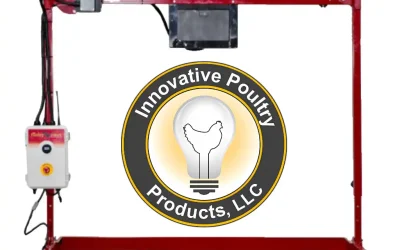
Poultry Hawk motorized cart: automation for poultry farms
Poultry Hawk Trolley: efficiency in poultry management. The poultry industry requires efficient solutions to optimize daily tasks inside rearing houses. In this context, the Poultry Hawk Trolley, manufactured by Innovative Poultry Products LLC, has become an...

What is the Yolk Index?
The Yolk Index: a key indicator of egg quality. The Yolk Index is an essential parameter in assessing egg quality, based on the ratio between the height and diameter of the yolk. It is mainly used in the poultry industry and quality control studies to determine the...
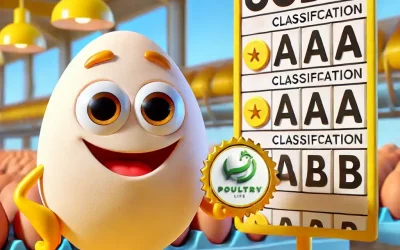
What is USDA classification?
USDA egg classification: Quality standards in the poultry industry. Egg classification is an essential process in the poultry industry to ensure that consumers receive high-quality and fresh products. One of the most widely used systems worldwide is the USDA...

What is the Haugh Unit?
Haugh Unit: The key indicator of egg freshness. Egg freshness is a determining factor in its quality and consumer acceptance. One of the most reliable and widely used methods worldwide to measure this freshness is the Haugh Unit, a standardized parameter that...

The revolution in egg evaluation: discover the Egg Tester Plus
Egg Tester Plus by ORKA Food Technology: Precision and efficiency in egg quality evaluation. The Egg Tester Plus has set new standards in egg quality evaluation. Thanks to its advanced technology, it allows for detailed analysis in a matter of seconds, providing...