Newly hatched chicks: poikilothermy and its impact on care
Newly hatched chicks face significant challenges due to their poikilothermic condition, meaning they cannot regulate their body temperature on their own during the first few weeks of life. This physiological characteristic has a direct impact on the care they must receive to ensure their well-being, growth, and survival.

What does it mean to be poikilothermic?
Poikilothermic animals depend on external heat to maintain their body temperature, as their ability to generate and conserve internal heat is limited. In the case of chicks, they hatch with thin down that does not provide sufficient thermal insulation. Additionally, their thermoregulatory system is not yet fully developed, making them extremely vulnerable to temperature changes. Without a warm, controlled environment, chicks can suffer from hypothermia, which compromises their development and increases the risk of diseases.
The importance of external heat.
During the first weeks, it is essential to provide a constant heat source for the chicks. Heat lamps, heating plates, or incubators are common tools that recreate the warmth they would typically receive from a mother hen. The ideal temperature varies as the chicks grow; it starts around 35-37°C during the first week and is gradually reduced until the chicks develop their adult feathers and thermoregulatory ability.
Signs of thermal stress in chicks.
Chicks send clear signals if they are uncomfortable with the temperature of their environment. If they are cold, they tend to huddle very close to the heat source, remain inactive, and may emit high-pitched cheeps. Conversely, if they are too hot, they disperse away from the heat source and show signs of discomfort, such as rapid breathing or lethargy. It is crucial to continuously monitor their behavior and adjust the temperature to avoid thermal stress.
Nutrition and development during poikilothermy.
Proper temperature care goes hand in hand with good nutrition. Chicks need an adequate balance of proteins, vitamins, and minerals to develop properly, as their metabolism is working both to keep warm and to grow. Poor nutrition or inadequate temperature conditions can delay development and increase mortality.
From poikilothermic to homeothermic: the thermal evolution of chicks.
As chicks grow, they transition from being poikilothermic to homeothermic, developing the ability to regulate their own body temperature. This transition is a critical process that occurs around the fourth week of life when their adult feathers begin to form and their metabolism improves. During this stage, chicks become less dependent on external heat but still require a cared-for environment to complete their development.
Understanding the poikilothermy of chicks and their needs is essential for providing the best possible care. Proper temperature management, along with good nutrition and attention to their behavioral signals, will ensure healthy growth and a successful transition to homeothermy.

Is plant-based meat an ultra-processed food?
YES, if we want it to be called plant-based meat. The food industry has developed products that aim to replicate, with remarkable precision, the characteristics of animal meat: its texture, flavor, aroma, and appearance. To achieve this, most plant-based meats...
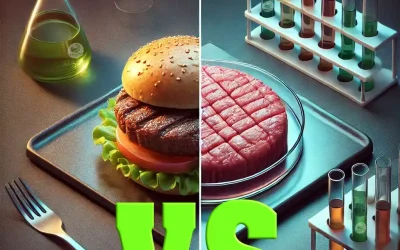
Plant-based meat vs. cultivated meat.
Alternatives to traditional meat: between plant-based and cultivated options. The debate on the future of sustainable food has placed plant-based meat and cultivated meat at the center of the conversation. Both alternatives aim to reduce environmental impact, improve...
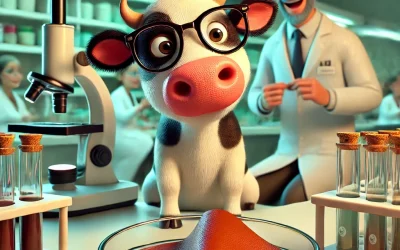
What is cultivated leather?
Cultivated leather: a sustainable revolution in the industry. Cultivated leather is an innovative material created from cell cultures in a laboratory, without the need for animal breeding and slaughter. Through advanced biotechnological processes, a product is...

Cultivated pork: Uncommon ethical and sustainable innovation
Uncommon: innovation in cultivated meat for a sustainable future. Uncommon, formerly known as Higher Steaks, is a biotechnology company based in Cambridge, UK, that is revolutionizing the way meat is produced. Founded in 2018 and rebranded in 2023, Uncommon...

What are sweet proteins?
The future of sweeteners: sweet proteins through precision fermentation. Sugar has long been a key ingredient in food, but its impact on health has led to the search for healthier alternatives. Among them, sweet proteins obtained through precision fermentation have...

Asia-Pacific drives sustainability with cultivated meat.
Asia-Pacific and cultivated meat: A promising future. The Asia-Pacific region is positioning itself as a global leader in the adoption of cultivated meat, thanks to an innovative approach that balances sustainability, technology, and tradition. In a context where meat...