Tea, yeast, and bacteria: the fascinating world of kombucha.
Kombucha is a fermented drink made from tea, sugar, and a symbiosis of bacteria and yeast known as SCOBY (Symbiotic Culture of Bacteria and Yeast). Its origin dates back more than 2,000 years in Asia, and over time, it has been valued for its potential health benefits.

The fermentation process.
The fermentation of kombucha occurs when the SCOBY metabolizes the sugar in the tea, producing organic acids, probiotics, antioxidants, and trace amounts of alcohol. This transformation not only gives it its characteristic slightly acidic and effervescent flavor but also makes it a drink rich in bioactive compounds.
The traditional production process is usually carried out in open containers covered with cloth to allow oxygenation and the proper development of the SCOBY. However, at an industrial level, more sophisticated methods have been implemented to ensure a safe and stable product. Interestingly, the use of fermenting vessels with principles similar to modern bioreactors already existed in ancient times, as documented in various cultures.
Potential benefits.
Although more conclusive scientific studies are needed, kombucha has been associated with various benefits, including:
- Improved gut health: thanks to its probiotic content.
- Antioxidant properties: derived from tea and the compounds generated during fermentation.
- Detoxifying effect: due to the presence of gluconic acid and other metabolites.
- Metabolism regulation: potentially beneficial for glucose and lipid control in the blood.
Kombucha and quality control.
To ensure the quality and safety of kombucha, especially in large-scale production, rigorous control of the microorganisms involved in fermentation is essential. In this context, technological advancements have enabled the incorporation of bioreactors, which maintain controlled conditions of temperature, pH, and oxygenation, ensuring a stable balance of beneficial microorganisms.
To learn more about how bioreactors were used in ancient times, you can read our article on bioreactors in antiquity.
Kombucha is a fermented beverage with a long history and growing interest in the modern world due to its potential health benefits. Its production requires careful microbiological balance, which has led to the implementation of advanced technologies to optimize its safety and quality.

Is plant-based meat an ultra-processed food?
YES, if we want it to be called plant-based meat. The food industry has developed products that aim to replicate, with remarkable precision, the characteristics of animal meat: its texture, flavor, aroma, and appearance. To achieve this, most plant-based meats...
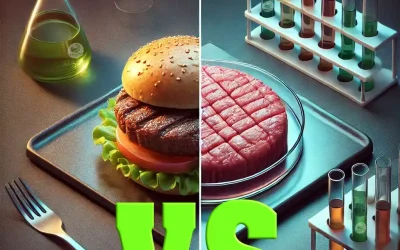
Plant-based meat vs. cultivated meat.
Alternatives to traditional meat: between plant-based and cultivated options. The debate on the future of sustainable food has placed plant-based meat and cultivated meat at the center of the conversation. Both alternatives aim to reduce environmental impact, improve...
What is cultivated leather?
Cultivated leather: a sustainable revolution in the industry. Cultivated leather is an innovative material created from cell cultures in a laboratory, without the need for animal breeding and slaughter. Through advanced biotechnological processes, a product is...

Cultivated pork: Uncommon ethical and sustainable innovation
Uncommon: innovation in cultivated meat for a sustainable future. Uncommon, formerly known as Higher Steaks, is a biotechnology company based in Cambridge, UK, that is revolutionizing the way meat is produced. Founded in 2018 and rebranded in 2023, Uncommon...

What are sweet proteins?
The future of sweeteners: sweet proteins through precision fermentation. Sugar has long been a key ingredient in food, but its impact on health has led to the search for healthier alternatives. Among them, sweet proteins obtained through precision fermentation have...

Asia-Pacific drives sustainability with cultivated meat.
Asia-Pacific and cultivated meat: A promising future. The Asia-Pacific region is positioning itself as a global leader in the adoption of cultivated meat, thanks to an innovative approach that balances sustainability, technology, and tradition. In a context where meat...