A fascinating natural phenomenon.
Double-yolk eggs are a natural curiosity that has intrigued people for generations. These eggs, as their name suggests, contain two yolks instead of one, making them a rarity and an interesting topic for both cooking enthusiasts and poultry experts. Below, we will explore how they form, their frequency, and whether there are significant differences between these eggs and regular ones.

How do double-yolk eggs form?
The formation of double-yolk eggs originates in the hen’s reproductive system. Normally, a hen ovulates one yolk that moves through the oviduct, where it is surrounded by the egg white, membrane, and finally, the shell. However, in some cases, the hen ovulates two yolks within a short period of time, before the first yolk has had the chance to be fully enclosed. As a result, both yolks become encased in a single shell, forming a double-yolk egg.
This phenomenon is more common in young hens that are still regulating their reproductive cycle or in those that are in the later years of their reproductive life. In most cases, these eggs are not the result of any health problem in the hen, but simply a natural anomaly.
Frequency of double-yolk eggs.
Double-yolk eggs are not extremely rare, but they are not common either. It is estimated that approximately 1 in 1,000 eggs produced is a double-yolk egg. However, the frequency may vary depending on the hen’s age and breed. Breeds of hens that have been bred for high egg production may have a higher tendency to lay double-yolk eggs, especially during the start of their reproductive life.
Some poultry farms even market these eggs as a curiosity, given their appeal to consumers looking for something different in their food. These eggs are usually larger and can be found in cartons of “jumbo” or “extra large” eggs.
Are they different in nutritional value?
Nutritionally, double-yolk eggs do not present significant differences compared to regular eggs, apart from having slightly higher calorie and fat content due to the double amount of yolk. This means that a double-yolk egg will have approximately twice the cholesterol and fats as a regular egg.
In cooking, double-yolk eggs can be useful for recipes that require a higher proportion of yolk, such as certain types of cakes or sauces. However, due to their rarity, many people prefer to enjoy them simply for the experience of finding a surprise in their breakfast.
Superstitions and popular beliefs.
Double-yolk eggs have been surrounded by various superstitions throughout history. In some cultures, it is believed that finding a double-yolk egg is a sign of good luck or a prediction of multiple pregnancies in the family. Although there is no scientific evidence to support these beliefs, finding a double-yolk egg still brings excitement to many people.
Double-yolk eggs are an interesting natural phenomenon that occurs with some regularity in poultry production. Although they are rare, they are not a cause for concern, and their appearance is often a source of surprise and fascination. From a nutritional perspective, they do not differ significantly from common eggs, although they add a unique touch to the culinary experience. The next time you crack an egg and find two yolks instead of one, you can better appreciate the natural process that led to its formation.

What is the Yolk Index?
The Yolk Index: a key indicator of egg quality. The Yolk Index is an essential parameter in assessing egg quality, based on the ratio between the height and diameter of the yolk. It is mainly used in the poultry industry and quality control studies to determine the...
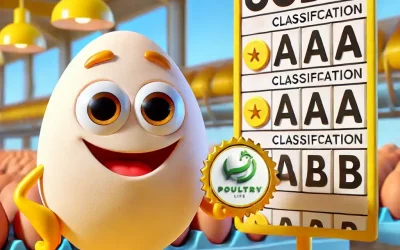
What is USDA classification?
USDA egg classification: Quality standards in the poultry industry. Egg classification is an essential process in the poultry industry to ensure that consumers receive high-quality and fresh products. One of the most widely used systems worldwide is the USDA...
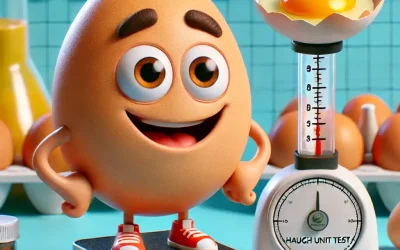
What is the Haugh Unit?
Haugh Unit: The key indicator of egg freshness. Egg freshness is a determining factor in its quality and consumer acceptance. One of the most reliable and widely used methods worldwide to measure this freshness is the Haugh Unit, a standardized parameter that...
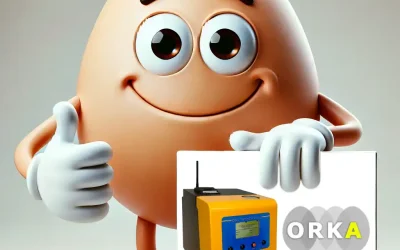
The revolution in egg evaluation: discover the Egg Tester Plus
Egg Tester Plus by ORKA Food Technology: Precision and efficiency in egg quality evaluation. The Egg Tester Plus has set new standards in egg quality evaluation. Thanks to its advanced technology, it allows for detailed analysis in a matter of seconds, providing...

Eggshell Thickness Gauge: precision in shell measurement
Eggshell thickness gauge by ORKA Food Technology: Precision and control in egg quality. The thickness of the eggshell is an essential factor for its strength, freshness, and commercial quality. An inadequate thickness can affect its integrity during transport and...

The reference in yolk color: DSM Yolk Color Fan
DSM Yolk Color Fan by ORKA Food Technology: Precision and standardization in yolk color evaluation. The color of the egg yolk is a key factor in consumer perception of quality and a fundamental aspect of the poultry industry. To standardize and simplify its...