Catalogue of novel food status in Europe: an essential guide for food innovation
The European food industry is constantly evolving, with the development of new products and ingredients aimed at meeting consumer demands and global challenges related to sustainability and nutrition. In this context, the “catalogue of novel food status” in Europe has become a fundamental tool for regulating the entry of novel foods into the European Union (EU) market.


What is the catalogue of novel food status?
The “catalogue of novel food status” is a database developed by the European Commission that provides guidance on whether a food or ingredient can be considered a “novel food” under Regulation (EU) 2015/2283. According to this regulation, a novel food is any substance or product that has not been consumed to a significant degree within the EU before May 15, 1997, the date when the first novel food regulation was introduced.
The catalogue aims to assist both regulatory authorities and food businesses in identifying whether a food product requires a safety assessment and authorization before it can be marketed.
Examples of novel foods.
The classification of “novel food” covers a wide range of products and technologies. Some examples include:
- New plant ingredients: Plants or botanical extracts that have not been previously consumed in the EU, such as certain types of algae or exotic plants.
- Foods derived from insects: The growing interest in insects as a source of protein has driven the research and commercialization of products derived from them.
- New processing technologies: Foods modified by new technologies, such as nanotechnology or innovative cell culture techniques.
- Supplements or functional ingredients: Products such as probiotics or concentrated extracts of certain foods that were not available in such concentrated forms before 1997.
How does the catalogue work?
The catalogue allows users to search for ingredients or food products and verify if they are considered “novel foods.” If a product appears in the catalogue, additional information is provided about its regulatory status and possible conditions for its commercialization.
It is important to note that the catalogue is only a reference and is not legally binding. However, it is a very useful tool for economic operators seeking guidance on whether they need to submit a product for safety assessment and the novel food authorization process.
Food safety and consumer protection.
The main objective behind the regulation of novel foods in Europe is to ensure that all products entering the market are safe for consumption. This includes a rigorous scientific assessment of potential health risks and a thorough review of production and marketing conditions. Additionally, novel foods must be properly labeled so that consumers can make informed decisions about what they are purchasing.
Implications for innovation in the food industry.
The novel food catalogue is a key tool for companies wishing to innovate and launch new products in the European market. By providing a clear view of the regulatory status of different ingredients and products, it allows companies to anticipate potential legal challenges and ensure they meet the necessary requirements.
For companies exploring the use of new protein sources, functional ingredients, or emerging technologies in the food sector, this catalogue represents an essential guide to facilitate responsible innovation while ensuring consumer safety.
The European novel food status catalogue not only regulates food safety but also promotes innovation in the food industry. For any company looking to introduce novel food products to the EU market, the catalogue is an indispensable resource to ensure regulatory compliance and the viability of their product.
https://food.ec.europa.eu/safety/novel-food_en
This link takes you directly to the online platform, where users can search and consult information about the status of various food products. For innovators in the food industry, the catalogue is the first step towards the approval and commercialization of products in the European Union.

Is plant-based meat an ultra-processed food?
YES, if we want it to be called plant-based meat. The food industry has developed products that aim to replicate, with remarkable precision, the characteristics of animal meat: its texture, flavor, aroma, and appearance. To achieve this, most plant-based meats...
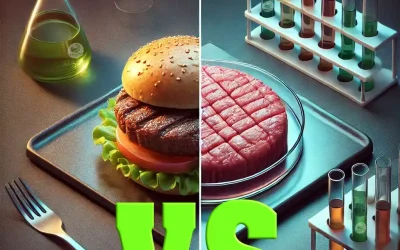
Plant-based meat vs. cultivated meat.
Alternatives to traditional meat: between plant-based and cultivated options. The debate on the future of sustainable food has placed plant-based meat and cultivated meat at the center of the conversation. Both alternatives aim to reduce environmental impact, improve...
What is cultivated leather?
Cultivated leather: a sustainable revolution in the industry. Cultivated leather is an innovative material created from cell cultures in a laboratory, without the need for animal breeding and slaughter. Through advanced biotechnological processes, a product is...

Cultivated pork: Uncommon ethical and sustainable innovation
Uncommon: innovation in cultivated meat for a sustainable future. Uncommon, formerly known as Higher Steaks, is a biotechnology company based in Cambridge, UK, that is revolutionizing the way meat is produced. Founded in 2018 and rebranded in 2023, Uncommon...

What are sweet proteins?
The future of sweeteners: sweet proteins through precision fermentation. Sugar has long been a key ingredient in food, but its impact on health has led to the search for healthier alternatives. Among them, sweet proteins obtained through precision fermentation have...

Asia-Pacific drives sustainability with cultivated meat.
Asia-Pacific and cultivated meat: A promising future. The Asia-Pacific region is positioning itself as a global leader in the adoption of cultivated meat, thanks to an innovative approach that balances sustainability, technology, and tradition. In a context where meat...