Animal-Free proteins: The magic of precision fermentation.
Precision fermentation is a revolutionary technology that is transforming the way we produce food, medicines, and bioactive compounds. This process, based on advances in synthetic biology, uses genetically modified microorganisms such as yeast, bacteria, or fungi to produce specific ingredients efficiently, sustainably, and in a controlled manner.

What is precision fermentation?.
Unlike traditional fermentation, which produces compounds like alcohol or lactic acid from sugars, precision fermentation relies on the genetic modification of microorganisms to produce specific substances. For example, yeast can be programmed to synthesize casein (a milk protein) or hemoglobin (a key compound for replicating the “meaty” flavor in vegan foods).
How does It work?.
- Genetic design:
- The gene encoding the desired compound (e.g., a protein or enzyme) is identified.
- This gene is inserted into the DNA of a microorganism, such as yeast or bacteria.
- Controlled fermentation:
- The modified microorganisms are cultivated in bioreactors under controlled conditions of temperature, pH, and nutrients.
- During the process, the microorganisms metabolize sugars or other energy sources to produce the desired compound.
- Purification:
- Once fermentation is complete, the produced compound is isolated, purified, and incorporated into final products.
- Genetic design:
Main applications.
- Food Industry:
- Alternative Proteins: Production of casein, egg albumin, and collagen for vegan and functional foods.
- Animal-Free Dairy: Creation of milk, cheese, and yogurt without the need for animals.
- Flavor and Texture Improvements: Production of compounds like hemoprotein to replicate the flavor and aroma of animal-based foods.
- Sweet proteins: Development of natural sweeteners through precision fermentation, such as brazzein and thaumatin, to replace sugar without calories or impact on glucose.
- Pharmaceutical Sector:
- Development of biologic medicines such as insulin, growth hormones, and antibodies.
- Production of vaccines and targeted treatments.
- Cosmetics and Personal Care:
- Generation of collagen and other ingredients used in skincare products.
- Food Industry:
Benefits of precision fermentation.
- Sustainability:
- Significantly reduces environmental impact by eliminating the need for raising animals or intensively exploiting natural resources.
- Minimizes greenhouse gas emissions and water and land use.
- Efficiency:
- Enables the rapid and controlled production of specific compounds.
- It is more predictable and reliable than traditional production methods.
- Personalization:
- Can be adapted to meet specific needs, such as food for people with allergies or special diets.
- Sustainability:
Notable examples.
- Perfect Day: A company that produces dairy proteins through precision fermentation to create ice creams, cheeses, and yogurts without animals.
- Impossible Foods: Uses hemoprotein produced by fermentation to replicate the “meaty” flavor in its vegan burgers.
- Geltor: Manufactures animal-free collagen for use in cosmetics and dietary supplements.
Future impact.
Precision fermentation has the potential to revolutionize multiple industries, from food to pharmaceuticals, by offering sustainable, efficient, and ethical solutions. As this technology continues to advance, it could play a key role in addressing climate change, food security, and animal welfare.
With a combination of scientific innovation and global collaboration, precision fermentation is paving the way toward a more sustainable and equitable future for all.

Is plant-based meat an ultra-processed food?
YES, if we want it to be called plant-based meat. The food industry has developed products that aim to replicate, with remarkable precision, the characteristics of animal meat: its texture, flavor, aroma, and appearance. To achieve this, most plant-based meats...
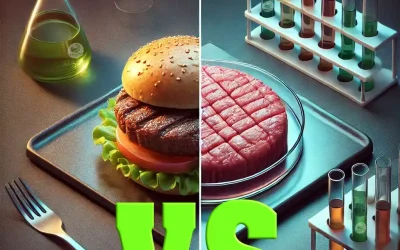
Plant-based meat vs. cultivated meat.
Alternatives to traditional meat: between plant-based and cultivated options. The debate on the future of sustainable food has placed plant-based meat and cultivated meat at the center of the conversation. Both alternatives aim to reduce environmental impact, improve...
What is cultivated leather?
Cultivated leather: a sustainable revolution in the industry. Cultivated leather is an innovative material created from cell cultures in a laboratory, without the need for animal breeding and slaughter. Through advanced biotechnological processes, a product is...

Cultivated pork: Uncommon ethical and sustainable innovation
Uncommon: innovation in cultivated meat for a sustainable future. Uncommon, formerly known as Higher Steaks, is a biotechnology company based in Cambridge, UK, that is revolutionizing the way meat is produced. Founded in 2018 and rebranded in 2023, Uncommon...

What are sweet proteins?
The future of sweeteners: sweet proteins through precision fermentation. Sugar has long been a key ingredient in food, but its impact on health has led to the search for healthier alternatives. Among them, sweet proteins obtained through precision fermentation have...

Asia-Pacific drives sustainability with cultivated meat.
Asia-Pacific and cultivated meat: A promising future. The Asia-Pacific region is positioning itself as a global leader in the adoption of cultivated meat, thanks to an innovative approach that balances sustainability, technology, and tradition. In a context where meat...