Infinite Roots: Revolutionizing the food industry with mycelium.
In the competitive and dynamic world of food innovation, Infinite Roots positions itself as a key leader by combining sustainability and technology in its revolutionary approach to food production. Formerly known as Mushlabs, this company has found in mycelium—the root structure of fungi—a solution to address some of the most pressing challenges in food production.

What is Infinite Roots?
Infinite Roots is a company dedicated to transforming the food system through the use of mycelium, a natural resource known for being highly nutritious, versatile, and environmentally friendly. Its primary goal is to produce high-quality ingredients that can adapt to a wide range of culinary applications, from traditional dishes to innovations in haute cuisine. A notable example of mycelium’s potential in the food industry is Quorn, a pioneering brand in the production of protein alternatives based on mycoprotein, demonstrating how this ingredient can be a sustainable and delicious option to replace meat in various preparations.
The production process.
Infinite Roots’ approach combines scientific research, technology, and sustainable practices to obtain a final product that is both healthy and eco-friendly. Its process is divided into three main stages:
- Species selection: From a database of over 2,300 edible species, those best suited for texture, flavor, and growth efficiency are selected.
- Liquid fermentation: Mycelium is cultivated in a controlled environment that simulates natural soil conditions. This process takes place in fermentation tanks using natural byproducts, such as beer spent grain, minimizing waste. This method aligns with the precision fermentation trend, a technique that utilizes microorganisms to produce specific ingredients like proteins, enzymes, or vitamins with high efficiency and a reduced environmental impact.
- Product customization: Once cultivated, the mycelium is blended with seasonings and adapted to regional tastes, becoming a versatile culinary ingredient.
Product benefits.
Infinite Roots’ products provide a healthy and sustainable solution compared to traditional proteins. Their key characteristics include:
- High nutritional density: Rich in proteins, fiber, vitamins, and essential minerals.
- Adaptable flavor and texture: Naturally provides umami that integrates easily into various dishes.
- Sustainable production: Uses significantly less land, water, and energy than meat or soy production.
Additionally, Infinite Roots’ approach also paves the way for cultivated proteins, which replicate the structure and nutritional values of meat without requiring animal farming or slaughter. This innovation represents a major evolution in food production, ensuring it is more ethical and sustainable.
Environmental impact.
One of the most remarkable aspects of Infinite Roots is its commitment to sustainability. Some key facts include:
- Land efficiency: Its production process is 500 times more efficient than beef farming in terms of protein yield per kilogram.
- Water savings: Requires 200 times less water than traditional meat production methods.
- Lower emissions: Mycelium fermentation generates minimal waste and greenhouse gas emissions.
A vision for the future.
In November 2023, the company adopted the name Infinite Roots as a statement of its commitment to positive change in global food systems. This new name reflects its holistic approach, rooted in nature yet driven by technology and innovation.
As global demand for sustainable food continues to rise, initiatives like Infinite Roots could play a crucial role in transitioning towards more resilient and responsible food systems. The combination of science, sustainability, and culinary creativity is not only redefining what we eat but also how we produce it.

Is plant-based meat an ultra-processed food?
YES, if we want it to be called plant-based meat. The food industry has developed products that aim to replicate, with remarkable precision, the characteristics of animal meat: its texture, flavor, aroma, and appearance. To achieve this, most plant-based meats...
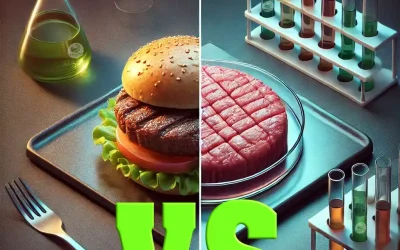
Plant-based meat vs. cultivated meat.
Alternatives to traditional meat: between plant-based and cultivated options. The debate on the future of sustainable food has placed plant-based meat and cultivated meat at the center of the conversation. Both alternatives aim to reduce environmental impact, improve...
What is cultivated leather?
Cultivated leather: a sustainable revolution in the industry. Cultivated leather is an innovative material created from cell cultures in a laboratory, without the need for animal breeding and slaughter. Through advanced biotechnological processes, a product is...

Cultivated pork: Uncommon ethical and sustainable innovation
Uncommon: innovation in cultivated meat for a sustainable future. Uncommon, formerly known as Higher Steaks, is a biotechnology company based in Cambridge, UK, that is revolutionizing the way meat is produced. Founded in 2018 and rebranded in 2023, Uncommon...

What are sweet proteins?
The future of sweeteners: sweet proteins through precision fermentation. Sugar has long been a key ingredient in food, but its impact on health has led to the search for healthier alternatives. Among them, sweet proteins obtained through precision fermentation have...

Asia-Pacific drives sustainability with cultivated meat.
Asia-Pacific and cultivated meat: A promising future. The Asia-Pacific region is positioning itself as a global leader in the adoption of cultivated meat, thanks to an innovative approach that balances sustainability, technology, and tradition. In a context where meat...