What is AMPS Innovation?
The Association for Meat, Poultry and Seafood Innovation (AMPS Innovation) is a nonprofit organization that brings together leading food companies dedicated to producing meat, poultry, and seafood directly from animal cells. Its primary mission is to promote innovative methods for producing high-quality and safe meat products, working in collaboration with the broader agricultural community to meet the growing global demand for animal proteins.

Commitment to transparency and safety.
AMPS Innovation advocates for the cultivated meat industry by sharing its collective expertise, providing information on its innovations, and committing to safety and transparency for all stakeholders, including industry partners, policymakers, advocates, and consumers.
Regulatory framework in the United States.
In March 2019, the U.S. Department of Agriculture (USDA) and the Food and Drug Administration (FDA) established a formal agreement to jointly regulate food products derived from livestock and poultry cells. Under this framework, the FDA oversees cell collection, cell banks, and their growth and differentiation, while the USDA is responsible for the production and labeling of these products.
It is important to note that cultivated seafood is regulated solely by the FDA.
Key industry advancements.
A significant milestone occurred in November 2022 when the FDA issued its first “No Questions Letter” to UPSIDE Foods, certifying that the company’s cultivated chicken is safe for consumption. Subsequently, in March 2023, the FDA granted a second similar letter to GOOD Meat for its cultivated chicken.
In June 2023, the USDA conducted the first official inspections for cultivated chicken, allowing it to be served in restaurants and, eventually, in grocery stores. By July 2023, some restaurants in the United States had begun including cultivated chicken on their menus.
The future of cultivated meat.
AMPS Innovation continues to work closely with the USDA and FDA to ensure that cultivated meat, poultry, and seafood products meet the highest safety and transparency standards. More cultivated products are expected to become available in restaurants and supermarkets in the near future.
This organization plays a crucial role in transforming the food industry, contributing to the development of sustainable and ethical alternatives for food production.

Is plant-based meat an ultra-processed food?
YES, if we want it to be called plant-based meat. The food industry has developed products that aim to replicate, with remarkable precision, the characteristics of animal meat: its texture, flavor, aroma, and appearance. To achieve this, most plant-based meats...

Plant-based meat vs. cultivated meat.
Alternatives to traditional meat: between plant-based and cultivated options. The debate on the future of sustainable food has placed plant-based meat and cultivated meat at the center of the conversation. Both alternatives aim to reduce environmental impact, improve...
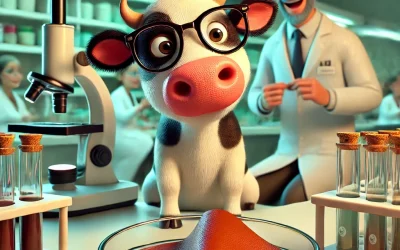
What is cultivated leather?
Cultivated leather: a sustainable revolution in the industry. Cultivated leather is an innovative material created from cell cultures in a laboratory, without the need for animal breeding and slaughter. Through advanced biotechnological processes, a product is...

Cultivated pork: Uncommon ethical and sustainable innovation
Uncommon: innovation in cultivated meat for a sustainable future. Uncommon, formerly known as Higher Steaks, is a biotechnology company based in Cambridge, UK, that is revolutionizing the way meat is produced. Founded in 2018 and rebranded in 2023, Uncommon...

What are sweet proteins?
The future of sweeteners: sweet proteins through precision fermentation. Sugar has long been a key ingredient in food, but its impact on health has led to the search for healthier alternatives. Among them, sweet proteins obtained through precision fermentation have...

Asia-Pacific drives sustainability with cultivated meat.
Asia-Pacific and cultivated meat: A promising future. The Asia-Pacific region is positioning itself as a global leader in the adoption of cultivated meat, thanks to an innovative approach that balances sustainability, technology, and tradition. In a context where meat...