The future of livestock fencing: From physical to virtual.
Livestock farming is a fundamental economic activity in many regions of the world. To ensure the security and efficient management of livestock, it is essential to have effective fencing systems. Traditionally, physical fences have been the predominant option, but with the advancement of technology, electric and virtual fences are gaining ground. This article examines the characteristics, advantages, and disadvantages of each type of fence, providing a comprehensive overview for livestock farmers looking to improve their management practices.


Physical fences.
Characteristics.
Physical fences are the most traditional and can be made of various materials such as wood, barbed wire, mesh, and metal posts. Their main function is to create a physical barrier that prevents livestock from passing through.
Advantages.
- Durability: Well-constructed, they can last many years.
- Visual and physical barrier: They provide a clear and tangible barrier for livestock.
- Low electronic maintenance: They do not require electricity or electronic components that can fail.
Disadvantages.
- High initial cost: Construction can be expensive, especially if high-quality materials are used.
- Maintenance: They may require frequent repairs due to damage from animals, weather, or vandalism.
- Limited flexibility: They are not easy to move or reconfigure once installed.
Electric fences.
Characteristics.
Electric fences use a conductive wire that carries electric pulses. When the livestock touches the wire, it receives a shock that, while not dangerous, is uncomfortable enough to deter future contact.
Advantages.
- Relatively Low Cost: They are more economical in terms of materials and labor compared to physical fences.
- Flexibility: They are easy to install and move, allowing changes in grazing management.
- Efficiency in Animal Control: They are effective in keeping livestock within established boundaries and can be used to control predators.
Disadvantages.
- Dependence on power: They require a continuous power source, which can be a challenge in remote areas.
- Technical maintenance: Electrical systems can fail and require technical knowledge for repair.
- Lower durability: Components can deteriorate faster than physical fences, especially in adverse weather conditions.
Virtual fences.
Characteristics.
Virtual fences are the latest innovation in livestock management. They use GPS technology and electronic collars to create invisible boundaries. When the animal approaches the set boundaries, the collar emits a stimulus (sound or vibration) that discourages the animal from crossing, similar to the NOFENCE virtual fence.
Advantages.
- Extreme flexibility: They allow grazing boundaries to be redefined quickly and easily through software.
- Low operating cost: Although the initial investment can be high, maintenance costs are generally low.
- Real-time monitoring: They allow continuous tracking of livestock, improving management and security.
Disadvantages.
- High initial cost: The technology can be expensive to implement, especially for large livestock operations.
- Technological dependence: They require technological infrastructure and technical knowledge for operation and maintenance.
- Connectivity issues: In rural areas with poor GPS or signal coverage, their effectiveness may be compromised.
Comparison.
Cost
- Physical: High initial cost, moderate maintenance.
- Electric: Low initial cost, technical maintenance.
- Virtual: High initial cost, low operational cost.
Flexibility
- Physical: Low.
- Electric: High.
- Virtual: Very high.
Durability and Maintenance
- Physical: High durability, frequent maintenance.
- Electric: Moderate durability, technical maintenance.
- Virtual: High durability, technological maintenance.
The choice of the appropriate type of fence depends on several factors, including the size of the grazing area, the type of livestock, location, and available resources. Physical fences remain a robust and reliable option for many livestock operations, while electric fences offer a flexible and economical solution. On the other hand, virtual fences represent the future of livestock farming, offering unprecedented flexibility and advanced livestock control.
Livestock farmers must carefully evaluate their needs and resources to make an informed decision that maximizes the efficiency and security of their operation. With the constant evolution of technology, it is likely that virtual fences will become increasingly accessible and prevalent in the livestock sector.
Food sovereignty in Morocco and Africa: the role of SGA Samrane Groupe Avicole
A community more than a company. SGA Samrane Groupe Avicole defines itself as a community built on trust, innovation, and science. Its purpose goes beyond business: it seeks to contribute to strengthening food sovereignty in Morocco and across Africa, driving a strong...
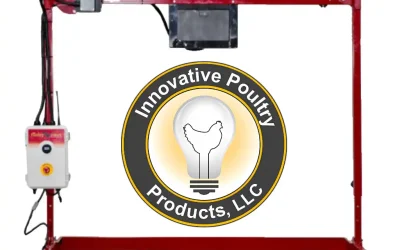
Poultry Hawk motorized cart: automation for poultry farms
Poultry Hawk Trolley: efficiency in poultry management. The poultry industry requires efficient solutions to optimize daily tasks inside rearing houses. In this context, the Poultry Hawk Trolley, manufactured by Innovative Poultry Products LLC, has become an...

Is plant-based meat an ultra-processed food?
YES, if we want it to be called plant-based meat. The food industry has developed products that aim to replicate, with remarkable precision, the characteristics of animal meat: its texture, flavor, aroma, and appearance. To achieve this, most plant-based meats...
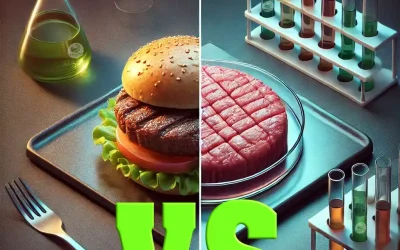
Plant-based meat vs. cultivated meat.
Alternatives to traditional meat: between plant-based and cultivated options. The debate on the future of sustainable food has placed plant-based meat and cultivated meat at the center of the conversation. Both alternatives aim to reduce environmental impact, improve...

What is cultivated leather?
Cultivated leather: a sustainable revolution in the industry. Cultivated leather is an innovative material created from cell cultures in a laboratory, without the need for animal breeding and slaughter. Through advanced biotechnological processes, a product is...

Cultivated pork: Uncommon ethical and sustainable innovation
Uncommon: innovation in cultivated meat for a sustainable future. Uncommon, formerly known as Higher Steaks, is a biotechnology company based in Cambridge, UK, that is revolutionizing the way meat is produced. Founded in 2018 and rebranded in 2023, Uncommon...