Bioreactors: The key to more efficient Bioethanol.
Bioethanol, a biofuel primarily derived from biomass, has gained prominence as a sustainable alternative to fossil fuels. Among the most advanced technologies for its production are bioreactors, controlled devices that optimize the biological process required to convert organic matter into ethanol.

The role of bioreactors.
Bioreactors are closed systems designed to create optimal conditions for the activity of microorganisms, such as yeasts and bacteria, that perform fermentation processes. These devices provide precise control over critical factors such as temperature, pH, nutrient concentration, and oxygen levels, ensuring greater efficiency in bioethanol production.
The raw materials used in this process can come from agricultural waste, such as corn cobs, sugarcane, or wood, making bioethanol a solution that promotes the circular economy by reducing waste and transforming it into renewable energy.
Benefits of Bioethanol produced in bioreactors.
The use of bioreactors in bioethanol production offers significant advantages:
- Sustainability: By utilizing organic waste materials, reliance on fossil fuels is reduced, and carbon emissions decrease.
- Efficiency: Bioreactors maximize biomass conversion into ethanol, increasing overall yield.
- Flexibility: The ability to use various biomass sources allows production to adapt to locally available resources.
Production process in bioreactors.
Bioethanol is primarily obtained through fermentation, where microorganisms break down the sugars in biomass to produce ethanol and CO₂. Bioreactors help maintain optimal conditions during this process, significantly increasing production speed and efficiency. Additionally, automation in bioreactors ensures high reproducibility and minimizes error margins.
Technological connections.
Although bioreactors in this context focus on bioethanol production, their technology shares principles with other fields, such as cellular agriculture. Likewise, bioreactor processes have parallels with the fermentation used in beer production. In both cases, yeasts play a crucial role in converting sugars into ethanol. However, while beer brewing aims to create specific flavors and aromas, bioreactors for bioethanol are designed to maximize yield and product purity.
Bioethanol produced in bioreactors represents a promising solution to address current energy and environmental challenges. By integrating innovative technologies, this sustainable biofuel offers a pathway toward a greener future. The efficiency, sustainability, and flexibility of bioreactors position them as a key tool in the transition toward renewable energy sources.

Is plant-based meat an ultra-processed food?
YES, if we want it to be called plant-based meat. The food industry has developed products that aim to replicate, with remarkable precision, the characteristics of animal meat: its texture, flavor, aroma, and appearance. To achieve this, most plant-based meats...
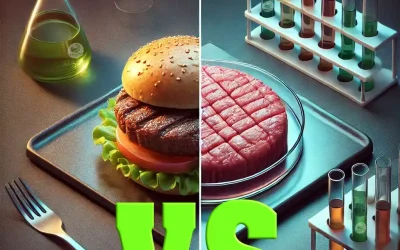
Plant-based meat vs. cultivated meat.
Alternatives to traditional meat: between plant-based and cultivated options. The debate on the future of sustainable food has placed plant-based meat and cultivated meat at the center of the conversation. Both alternatives aim to reduce environmental impact, improve...
What is cultivated leather?
Cultivated leather: a sustainable revolution in the industry. Cultivated leather is an innovative material created from cell cultures in a laboratory, without the need for animal breeding and slaughter. Through advanced biotechnological processes, a product is...

Cultivated pork: Uncommon ethical and sustainable innovation
Uncommon: innovation in cultivated meat for a sustainable future. Uncommon, formerly known as Higher Steaks, is a biotechnology company based in Cambridge, UK, that is revolutionizing the way meat is produced. Founded in 2018 and rebranded in 2023, Uncommon...

What are sweet proteins?
The future of sweeteners: sweet proteins through precision fermentation. Sugar has long been a key ingredient in food, but its impact on health has led to the search for healthier alternatives. Among them, sweet proteins obtained through precision fermentation have...

Asia-Pacific drives sustainability with cultivated meat.
Asia-Pacific and cultivated meat: A promising future. The Asia-Pacific region is positioning itself as a global leader in the adoption of cultivated meat, thanks to an innovative approach that balances sustainability, technology, and tradition. In a context where meat...