Technological Innovations in Biosecurity: Spraying Drones
In recent years, the introduction of drones in agriculture has revolutionized various practices, including spraying and pest control. Spraying drones, equipped with precise spraying systems, have become an essential tool for enhancing biosecurity on farms. This technology is not only applicable in crop farming but has also found significant use in poultry farming, especially in countries like China.
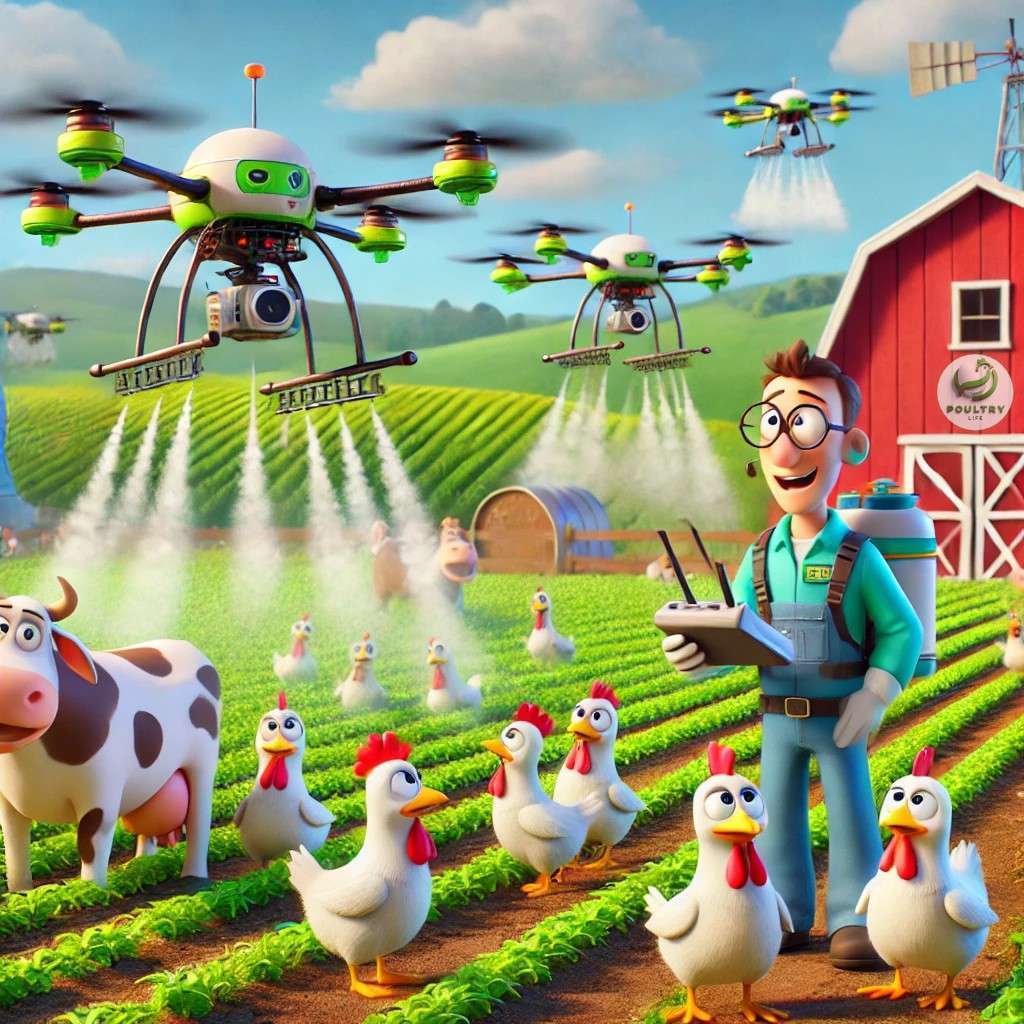

Advantages of using Drones in external biosecurity.
- Efficient and precise coverage: Drones enable uniform and precise coverage of large and hard-to-reach areas, which is crucial for applying disinfectants and pesticides. This ensures that all areas of the farm, including exclusion zones and perimeters, receive the necessary treatment without wasting chemicals.
- Reduction of human risk: Using drones minimizes personnel exposure to potentially hazardous chemicals. This not only protects the health of workers but also allows for safer and more controlled application in sensitive areas.
- Rapid response to disease outbreaks: In the event of a disease outbreak, drones can be quickly deployed to apply disinfectants or specific treatments. This rapid response capability is essential for containing the spread of infectious diseases at an early stage.
- Monitoring and mapping of risk areas: Drones can be equipped with cameras and sensors for continuous monitoring of the health of crops and animals, as well as for identifying areas with high risk of pests or diseases. This enables farm managers to make informed and proactive decisions regarding biosecurity measures.
Case studies and practical applications.
In China, the use of spraying drones has been widely adopted, not only in crop agriculture but also in poultry farming. Chinese poultry farmers have found drones to be an effective solution for disinfecting large poultry production areas, particularly in preventing diseases such as avian flu. Drones allow for quick and uniform disinfection of breeding areas, significantly reducing the risk of outbreaks and improving overall sanitary conditions.
A study conducted on Chinese poultry farms showed that using drones for disinfection reduced application times and improved coverage compared to manual methods. Additionally, this technology has facilitated access to hard-to-reach areas, such as roofs and elevated spaces within breeding facilities, which are crucial for complete disinfection.
These examples of application demonstrate how the adoption of spraying drones can significantly improve biosecurity practices in various agricultural industries, including poultry farming.
Considerations and regulations.
The use of drones on farms is subject to specific regulations that vary by region. It is important for farms looking to implement this technology to familiarize themselves with local regulations and obtain the necessary licenses. Furthermore, drone operators should be trained and certified to operate safely and effectively.
Spraying drones represent an innovative and effective tool for enhancing external biosecurity measures on farms. Their ability to perform precise applications, reduce risks to workers, and provide valuable data for decision-making makes them a valuable investment for any modern agricultural operation. The experience in China, both in agriculture and poultry farming, underscores the potential of this technology to transform biosecurity management practices, ensuring a safer and more efficient environment.
Food sovereignty in Morocco and Africa: the role of SGA Samrane Groupe Avicole
A community more than a company. SGA Samrane Groupe Avicole defines itself as a community built on trust, innovation, and science. Its purpose goes beyond business: it seeks to contribute to strengthening food sovereignty in Morocco and across Africa, driving a strong...
Poultry Hawk motorized cart: automation for poultry farms
Poultry Hawk Trolley: efficiency in poultry management. The poultry industry requires efficient solutions to optimize daily tasks inside rearing houses. In this context, the Poultry Hawk Trolley, manufactured by Innovative Poultry Products LLC, has become an...
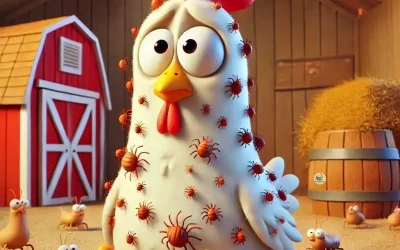
Parasites in birds: Differentiating mites, lice, and fleas and their poultry impacts
Mites, lice, and fleas in poultry farming: differences and effects on birds. In poultry farming, external parasites such as mites, lice, and fleas represent a significant problem that affects the health, welfare, and productivity of birds. These ectoparasites can...
Rodents: a silent threat in poultry farming
Mice and rats in poultry farming: more than just a simple problem. Rodents, especially rats and mice, represent a significant threat to poultry farming, often underestimated by producers. These small animals are not just a hygiene problem; they can also cause...
Biofilms in poultry farming: between threat and opportunity
Microbes in action: the power of biofilms in poultry farms. Biofilms are communities of microorganisms that adhere to surfaces, encapsulated in a protective matrix that they secrete themselves. These organisms can be bacteria, fungi, or algae, and they are present in...
Aflatoxins: A hidden danger in poultry production
Aflatoxins in poultry farming: A challenge for production and animal health. Aflatoxins are a group of mycotoxins mainly produced by fungi of the Aspergillus genus, especially Aspergillus flavus and Aspergillus parasiticus. These toxins are common contaminants in...